inKONBINI: One Store. Many Stories Review - One Bore, Few Worries

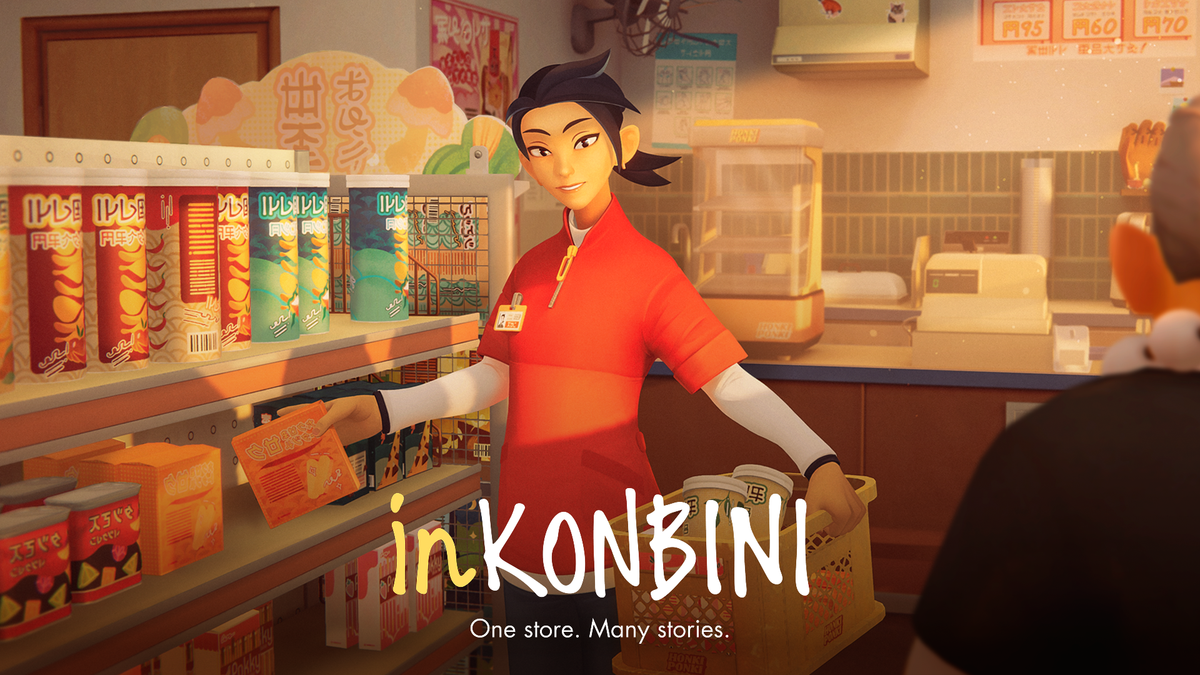
More Meditative, Less Simulation, No Adventure
In 2023, I visited Japan for the very first time in my life. And one of the very things I tried was an onigiri rice ball at a konbini, a Japanese convenience store; in this case, it was a 7-Eleven. Unlike the 7-Eleven horror shows found in Europe and the US, Japanese konbinis are clean, welcoming experiences with surprisingly high-quality foods, such as sushi and egg salad sandwiches. You can also find home products and clothing from reputable stores such as Muji. So in 2024, imagine my delight when the developer, Nagai Industries, announced a "meditative narrative adventure/simulation game", a love letter to this magical store experience. I've long been a fan of management sims (simulators) since the SNES version of SimCity. This game was officially on my radar. Flashing forward to April 2026, I played something different than expected...
inKONBINI in a Wasabi-Covered Nutshell
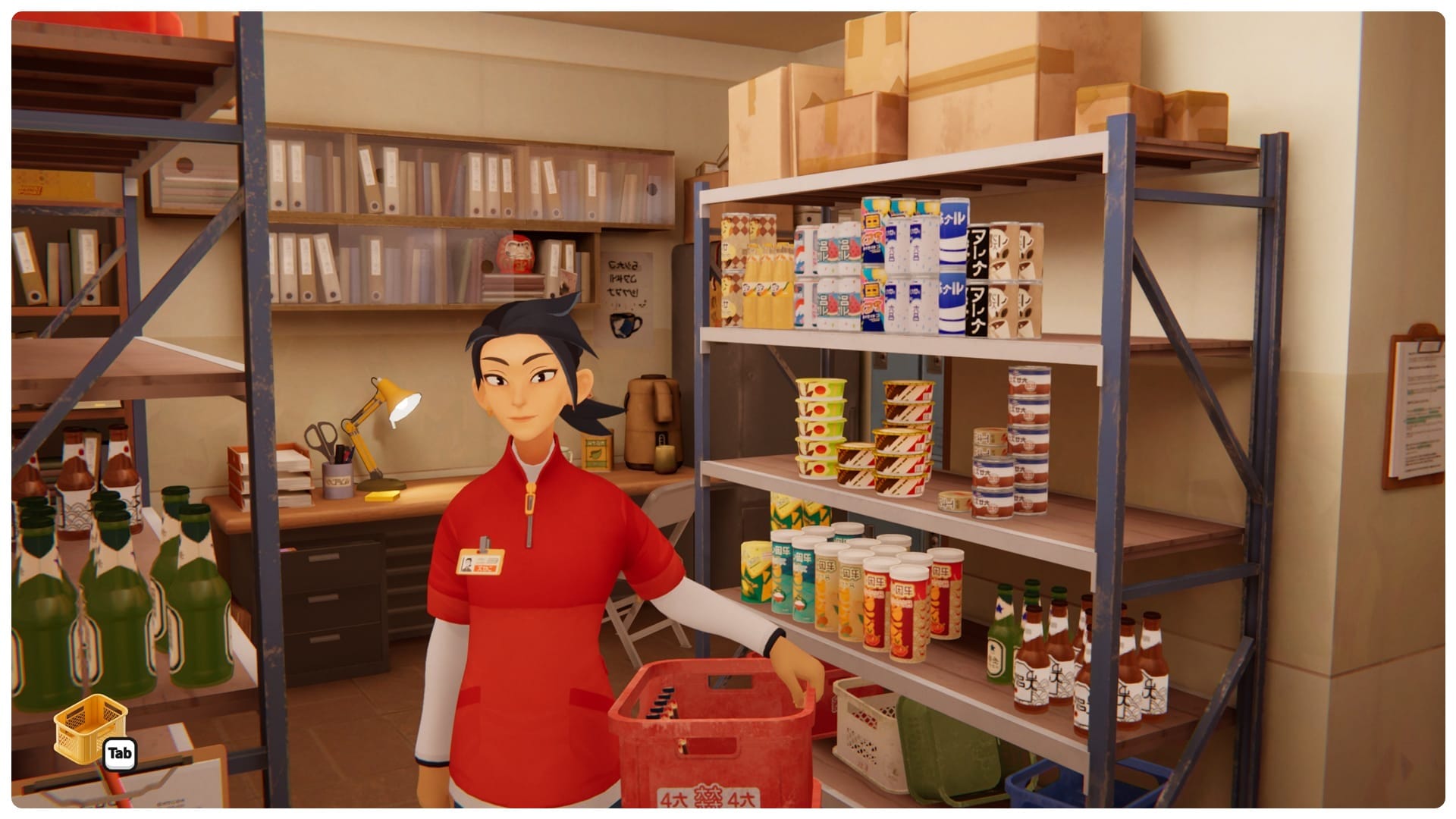
In inKONBINI (innit), you play as a college student, Makoto, who is taking over the night shift of a small town konbini from her Aunt Hina while she is on vacation for a week. During this week, you restock and organise shelves, interact with four different customers and listen to their life stories and dreams, and perhaps change their destinies!
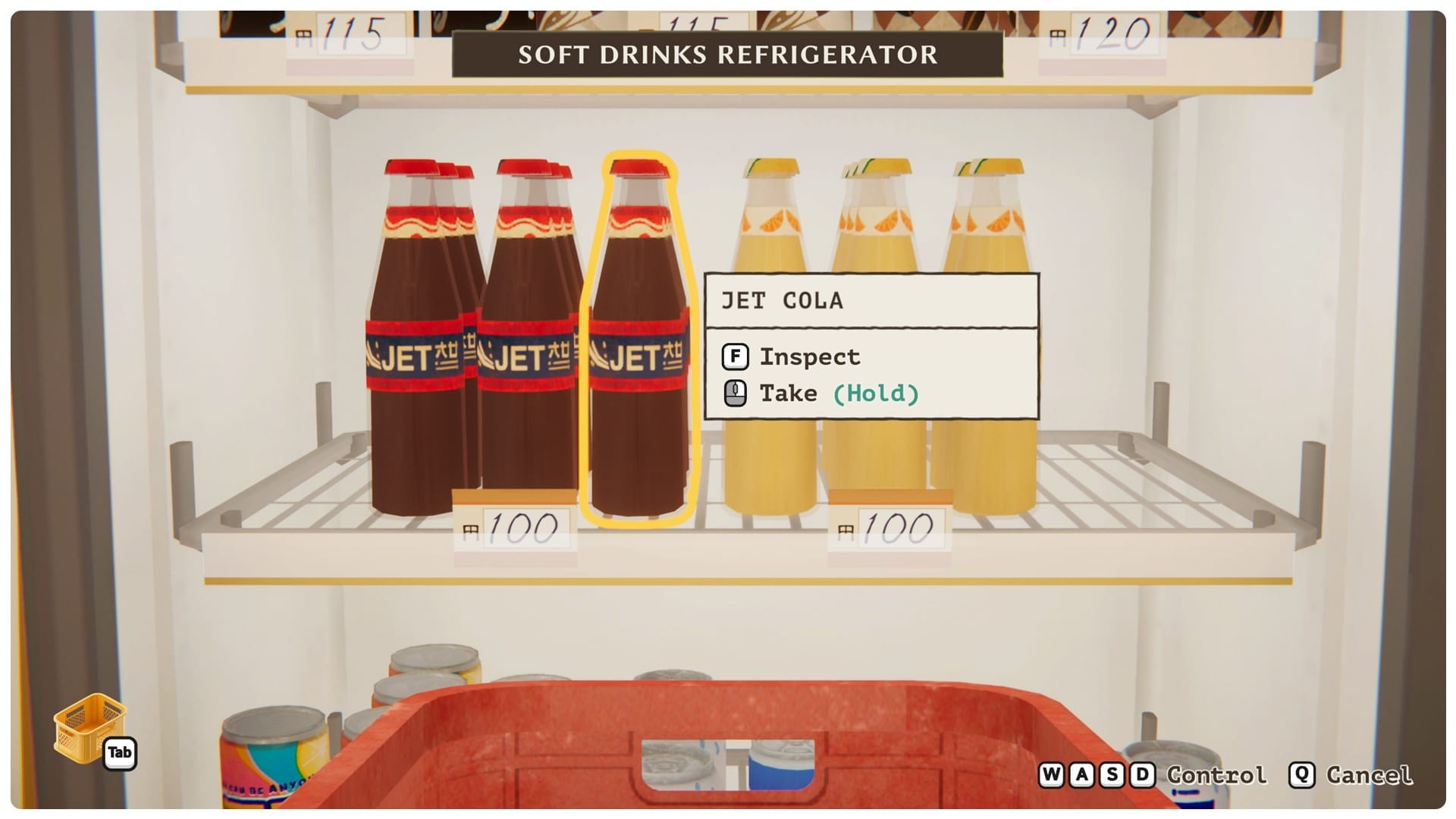
Probably the strongest gameplay element is the store mechanics. Each stock item (such as a can, bottle, or bag of rice) is modelled and rendered in 3D. You can inspect them and rotate them in 3D. It felt really satisfying to reorganise the shelves, stack items, empty delivery boxes, and find items that had been miscategorised or misplaced. The game enforces the meditative approach by eschewing any time limits or restrictions on your store management, and neither punishes nor rewards you for your item placement. Whether this is a good or bad design decision is up to the beholder. I must have spent an extra hour or so making sure that every item in the storeroom was shelved and that every shelf had consistent logic and arrangement, so I appreciated that aspect of the game.
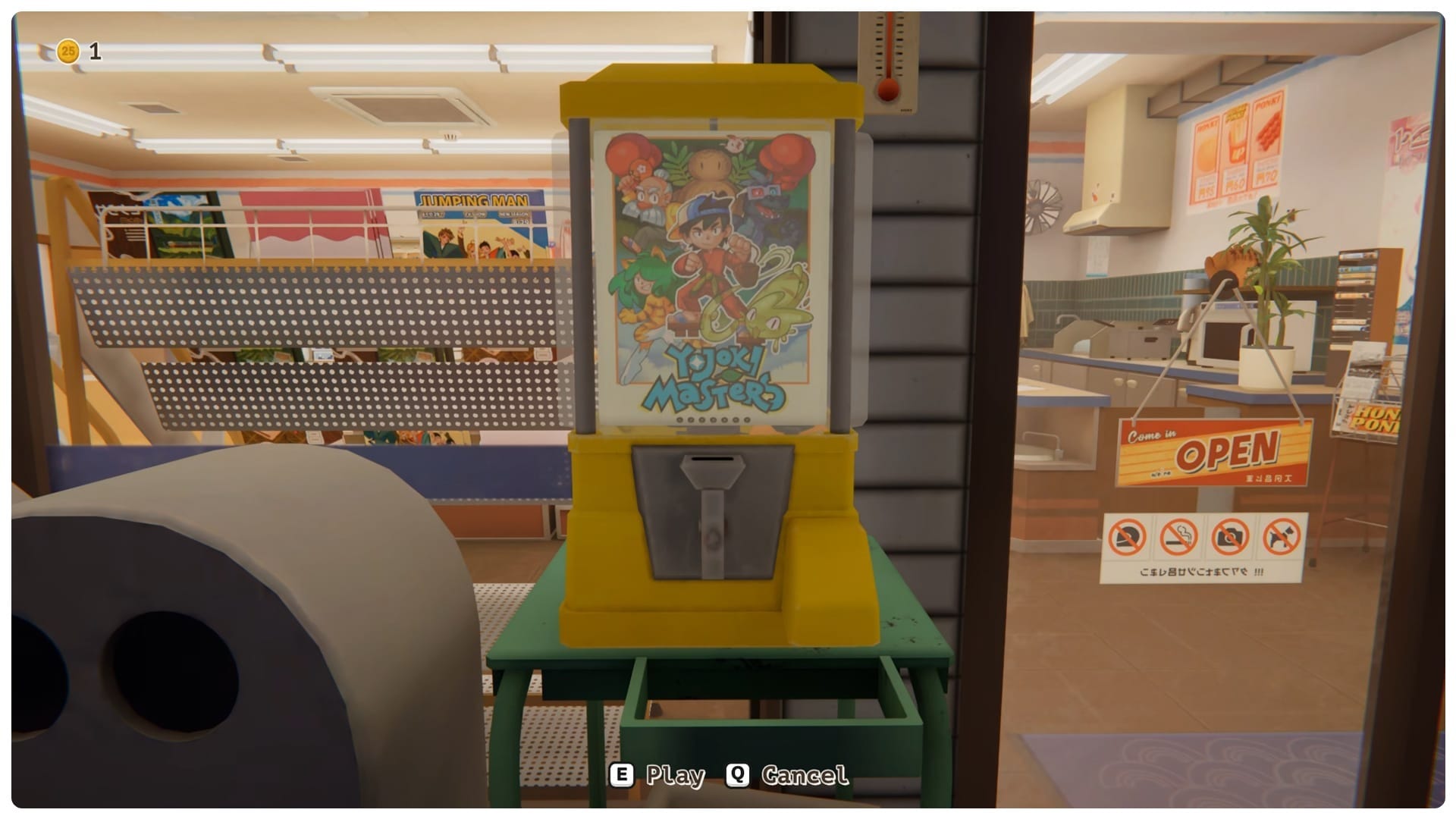
My second favourite feature was the in-game capsule machine, and yes, you can complete the collection in one playthrough.
Just Get on With It!
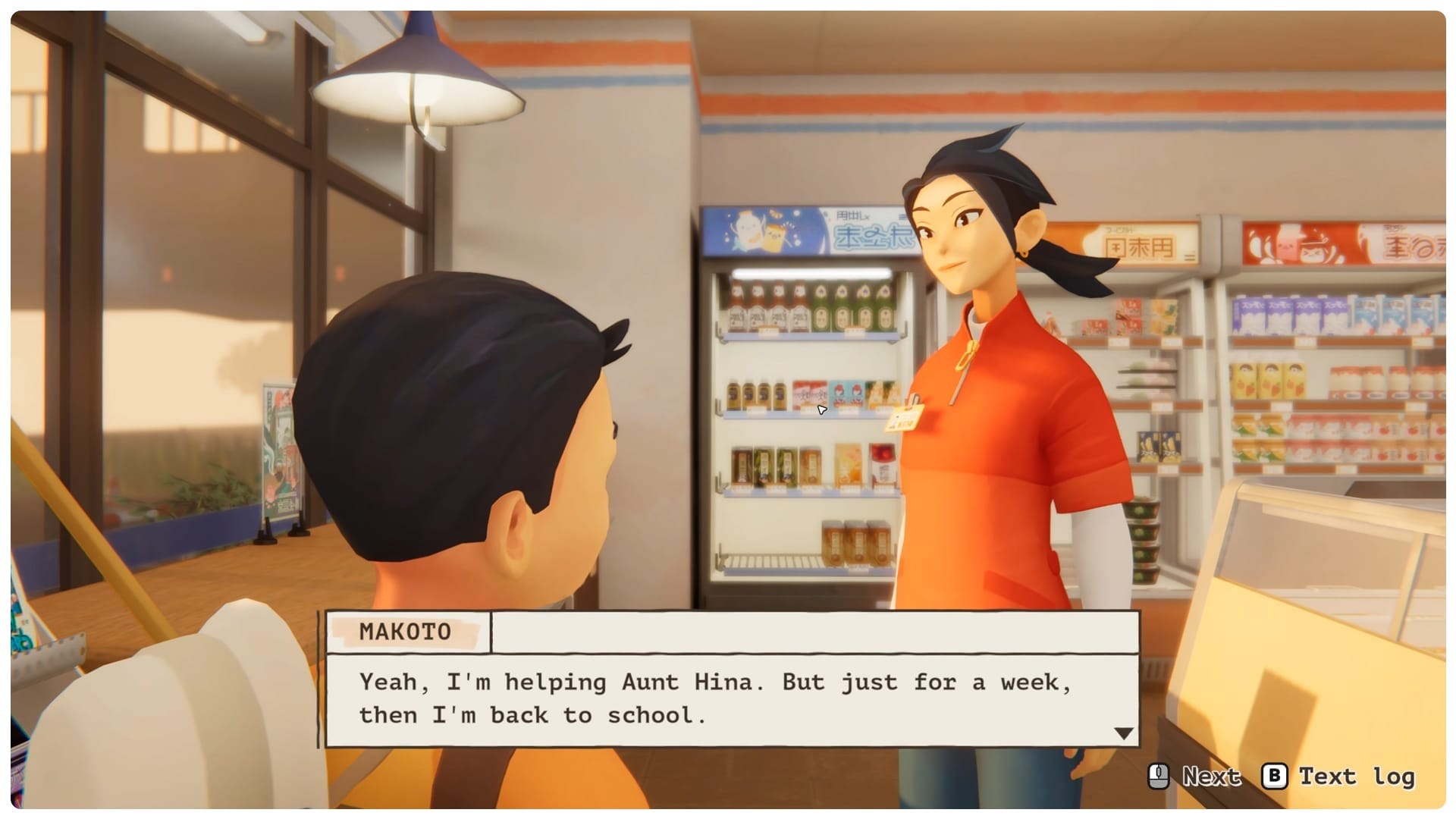
The weakest aspect of the game are the touted "Many Stories." Each evening, a customer will come in and start browsing the aisles, commenting if there's an item out of place or misaligned and then eventually ask for help if there's an item they require or if they need a recommendation. Like a needy cat, they will keep pestering you for help until you give in to their demands. And when you complete their request, they will spout endless existential text about their job, obsession with rituals, or business idea, and then leave. Makoto will then have a moment of self-reflection about small-town life, community, living in the moment, etc. And this cycle continues for six more chapters. Perhaps I'm a misanthrope, but I just did not find the characters or their motivations to be believable or engaging.
With its references to ghost stories, talismans and rituals, I thought that there would have been a supernatural element later in the story. In a midweek chapter, the game's mystery man enters, and the lights go off! But it was just a mundane power cut. With all the possibilities of the medium, the developers chose to go for a mundane slice of life narrative with zero stakes. Of course, there is nothing wrong with doing so; it's just a narrative that didn't work for me.
Lost in Translation
Befuddlingly, Nagai Industries, which is a development studio based in Tokyo, Japan, didn't use real Japanese characters (as in kanji or hiragana) in the design of the items or posters within the game. The developers have stated that they used a Japanese designer to create a fictional script language in the game, which makes it additionally confusing, as the game is set in Japan in the 90s. Using real Japanese characters could have allowed the designers to create puns and in-jokes for Japanese-savvy players.
"Charlie" Switch Performance
One tidbit I learned in the game is that Japanese companies will change the name of an underperforming employee to a Western name to suggest that they are foreign and don't understand Japanese very well. In this case, one of the background characters is called Charlie. Unfortunately, the Switch 2 version seems to have performance issues; everything runs at a slow pace, characters seem to move like they're wading through treacle, at first I thought I had purchased the OG Switch version by accident, but soon confirmed that I had indeed bought the correct edition. Then I thought it must be a stop motion aesthetic to the movement. But looking at Let's Plays online of the PC and PlayStation versions, the game runs at a smooth 60fps on those platforms, meaning the developers had not optimized the game for Switch platforms. It's a minor annoyance, as the slower performance does not impact gameplay, but it is disappointing considering the graphics do not feature complex geometry or lighting.
Final Verdict: Mixed Feelings Like a Bag of Wasabi-Covered Nuts, a Little Bit Spicy
If you're expecting a cosy management simulator to max/min stock inventories and profits, this is not the game for you. I would recommend last year's Discounty instead. InKONBINI is effectively a 3D visual novel with subtle decisions depending on the items that you give your customers. The game does feature many achievements to reward replays, but I just don't care enough about the stories or characters to give it another go. Perhaps if they made an endless mode or timed mini-game in a future update, I would revisit this. This was clearly a labour of love for the developers. I really wanted to love it too, but I found it all a bit twee.
Review is based on a complete play-through of 8 hours on a Nintendo Switch 2 console. inKONBINI: One Store. Many Stories is available to purchase on all platforms.